
Most homeowners have heard of energy monitoring. Relatively few have installed it, and fewer still use it to its full potential. That is a shame, because circuit-level monitoring is one of the least glamorous, most genuinely useful technologies you can add to a home.
What it actually does
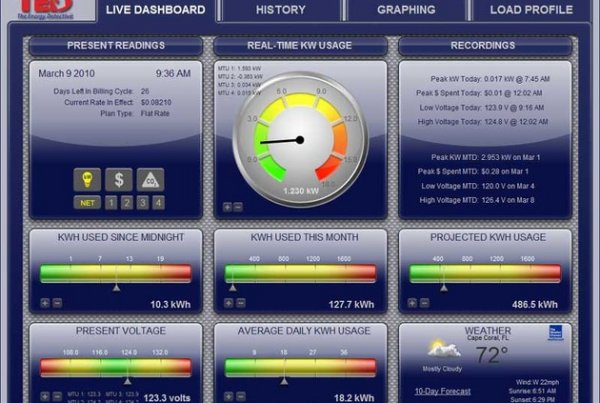
A properly installed monitoring platform tracks energy usage at the main panel, and in the better systems, at the individual circuit level, giving you a live, granular picture of where your electricity is actually going. Rather than an estimate at the end of a billing cycle, you see, in real time, exactly what turning off a bank of lights or running a dryer costs you.
How to actually use it
The first step is visibility: put a display somewhere you will actually see it, not in a basement utility closet, so usage stays top of mind for the whole household. From there, the graphing and history tools reveal patterns, spikes in usage worth a closer look, whether a dishwasher habitually runs during peak pricing hours, or air conditioning is left running longer than intended.
Taken further, monitoring can identify which specific appliances are consuming the most electricity year-round, often revealing an aging fridge or an inefficient fixture as the quiet culprit behind a persistently high bill.
Why it matters even more with solar and battery storage
For a home with its own generation, monitoring stops being merely informative and becomes operational: it is how load management software decides when to draw from the battery, when to pull from the grid, and when to export surplus, all automatically, and all visible to you in a dashboard as vivid as it is useful.
It is, in short, the instrumentation that turns a solar and battery installation from a static piece of equipment into a genuinely intelligent home energy system.