
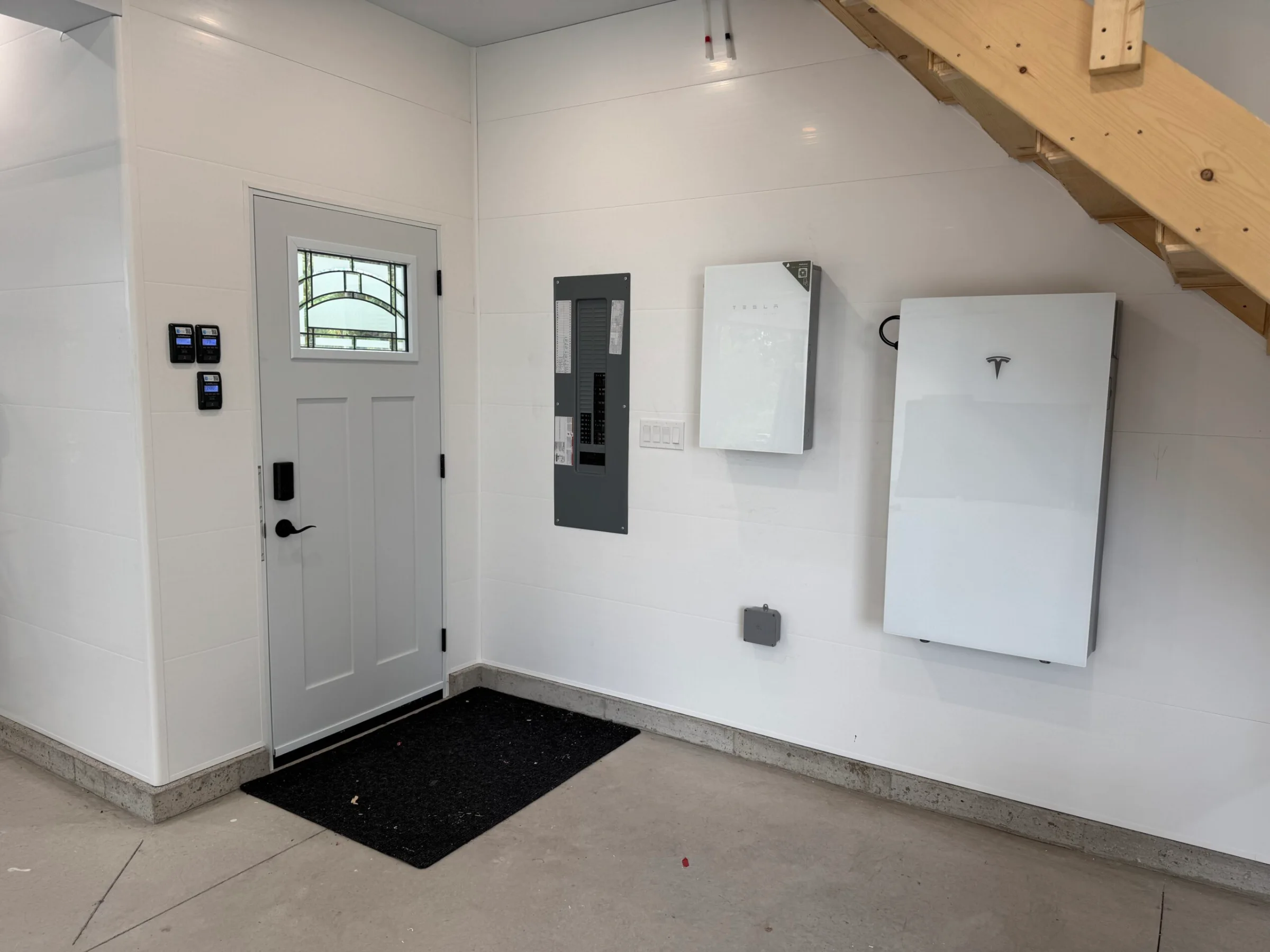
Every solar array, battery, and EV charger Bluewater Energy installs is inspected by the Electrical Safety Authority before it is energized. Most homeowners never see that part of the process, yet ESA permits and inspections are the province’s independent check that the electrical work behind a system is safe, properly certified, and built to code. Understanding how they work is one of the simplest ways to separate a genuinely professional installer from everyone else.
What the Electrical Safety Authority does
The Electrical Safety Authority, known as ESA, administers the Ontario Electrical Safety Code. It also licenses the province’s electrical contractors through the Electrical Contractor Registration Agency, and it inspects electrical installations to confirm that they meet the Code. When ESA permits and inspections are part of a project, a third party with no commercial interest in the outcome has reviewed the work.
Who files the notification, and when
Before electrical work begins, a notification of work, commonly called a permit, is filed with ESA. ESA’s guidance to homeowners is direct: the notification should be filed before the work starts, and if you hire someone to do the work, by law it must be a Licensed Electrical Contractor.
“If you hire someone to do your electrical work, by law, it must be a Licensed Electrical Contractor (LEC).”
Electrical Safety Authority, guidance to homeowners
Bluewater Energy is a licensed electrical contractor, registered under ECRA/ESA Licence 7012012, with a designated Master Electrician on our team. We file the notification on every project, before any electrical work begins. You can read more about our licensing on our Credentials page.
What the inspector looks for on a solar installation
An ESA inspection of a grid-connected solar system focuses on the electrical safety of the installation itself. ESA’s guideline for inverter-based micro-generating facilities describes the essentials, including:
- Approved equipment throughout. ESA’s guideline states that “all electrical devices and equipment shall be approved and bear accepted product approval markings for use in Ontario.”
- A utility-interactive inverter certified to the applicable CSA standard, which ensures the system shuts down safely if the grid goes down.
- Properly rated overcurrent protection, and clearly labelled disconnecting means, so a utility worker or firefighter can isolate the system with confidence.
- Wiring methods that meet the Code, with a single-line diagram of the system posted at the installation.
ESA’s inspection concerns the electrical installation; it does not assess the structural integrity of the roof. That responsibility sits with the designer and installer, which is why every Bluewater array is engineered for the roof it sits on, not simply attached to it. Our approach to residential solar panel installation treats the roof as the most valuable asset on the job.
Battery storage brings its own requirements
Energy storage systems receive particular attention. Self-contained residential battery systems are expected to carry the appropriate certification as complete systems, and the Code restricts where they may be placed. As ESA has explained to contractors, energy storage systems cannot be installed in the living spaces of a dwelling. Larger storage systems operating in parallel with the grid also require ESA plan review before installation.
These rules shape the design from the outset: where the battery lives, how it is protected, and how it is disconnected. You can see how we approach this on our home battery storage page.
From inspection to grid connection
For a system that exports to the grid, the inspection is also a gateway. Once the installation passes, ESA notifies the local utility that the system may be connected. The utility then finalizes the connection agreement and installs a bi-directional meter. We walk through that sequence in detail in our guide to microgeneration in Ontario.
The certificate you should receive
When the work passes inspection, ESA issues a Certificate of Acceptance to the person who filed the notification. ESA recommends that homeowners ask for a copy for their records. It is a document worth keeping with your home’s papers: insurers, buyers, and future electricians may all ask for it. Bluewater includes it in every client handover.
How to verify your contractor
ESA suggests asking any contractor for their ECRA/ESA licence number, which should appear on their vehicle, business card, and estimate, and confirming it with ESA’s online Find a Contractor tool. Ask, as well, whether the contractor’s own licensed electricians will perform the work, and whether a notification will be filed for every part of the project, including the battery and any EV charger.
Why it matters
A permit is not paperwork for its own sake. It is the moment an independent authority confirms that the system on your home was built the way it should have been. At Bluewater Energy, it is simply part of how every project is delivered. If you are planning a solar, battery, or electrification project, we would be glad to walk you through it.